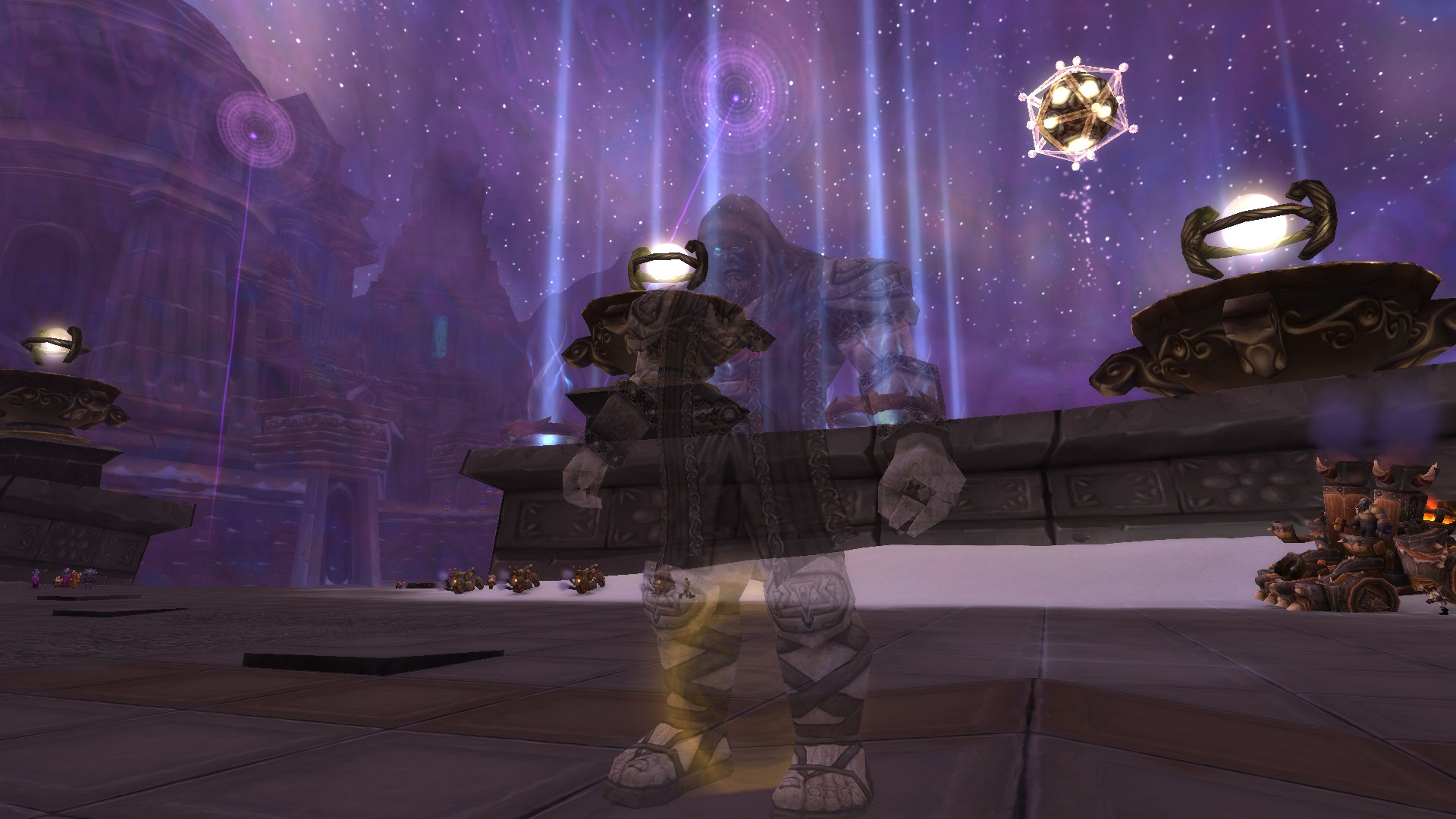
The Keepers of Ulduar, once noble guardians of Azeroth, fell victim to the insidious corruption of Yogg-Saron, the Old God. This guide delves into the mechanics of how Yogg-Saron exerted mind control over Mimiron, Freya, and Thorim, transforming them from protectors into pawns. Understanding this corruption not only enriches the lore of World of Warcraft but also highlights the broader implications of Old God influence within the game.
How Did Yogg-Saron Control Mimiron?
Yogg-Saron controlled Mimiron through a combination of psychological manipulation and direct mental assault, exploiting his fears and insecurities.

Mimiron, the Keeper of Knowledge and Technology, was initially tasked with safeguarding Ulduar’s secrets. However, Yogg-Saron’s influence preyed on Mimiron’s doubts about his creations and their potential to cause harm. This manipulation was not merely a matter of overpowering him; it involved a deep psychological strategy that involved planting seeds of doubt and fear. As Mimiron began to question his own inventions, Yogg-Saron’s whispers grew stronger, leading him to believe that his creations could become a threat to the world, thus making him more susceptible to control.
Mechanically, Yogg-Saron’s mind control over Mimiron can be understood through the lens of game mechanics that emphasize psychological warfare. In the raid encounter, players witness Mimiron’s transformation into a corrupted version of himself, showcasing how Yogg-Saron’s influence manifests in the form of powerful constructs and chaotic technology. To counteract this, players must focus on interrupting Mimiron’s abilities, which are a direct reflection of his corrupted state. This requires precise coordination and understanding of his mechanics, such as the use of the ‘Saronite Vapors’ and ‘Rocket Strike’ abilities, which symbolize his internal struggle.
What Methods Did Yogg-Saron Use to Corrupt Freya?
Yogg-Saron corrupted Freya by exploiting her deep connection to nature and her protective instincts, turning her guardianship into a weapon against her allies.
Freya, the Keeper of Life, was particularly vulnerable due to her profound bond with the natural world and her role as a protector of all living things. Yogg-Saron’s corruption manifested as a twisted reflection of her nurturing nature, transforming her guardians into monstrous entities that attacked indiscriminately. This manipulation was not just physical; it involved distorting her perception of reality, making her believe that her allies were threats to the very life she sought to protect. The psychological toll of this corruption is evident in her fight mechanics, where players must contend with waves of corrupted creatures that Freya commands.
In gameplay terms, Freya’s encounter showcases the duality of her character—both a protector and a corrupted force. Players must navigate through her abilities, such as ‘Nature’s Fury’ and ‘Wrath of the Earth,’ which serve as manifestations of her corrupted state. To effectively counter her, players need to focus on dispelling her buffs and managing the adds that spawn throughout the encounter. Understanding the rhythm of her abilities and the timing of her attacks is crucial for overcoming her corrupted form and restoring her to her former self.
- Identify and interrupt Freya’s ‘Nature’s Fury’ to reduce damage output.
- Focus on dispelling her buffs to weaken her abilities.
- Manage the adds effectively to prevent overwhelming the raid.
- Coordinate cooldowns during her ‘Wrath of the Earth’ to mitigate damage.

What Impact Did Yogg-Saron’s Control Have on Thorim?
Yogg-Saron’s control over Thorim manifested as a deep-seated paranoia, leading him to mistrust his allies and engage in destructive behavior.
Thorim, the Keeper of Storms, was known for his strength and wisdom, but Yogg-Saron’s influence twisted these traits into paranoia and aggression. The Old God exploited Thorim’s protective instincts towards his brother, Loken, and turned them against him. This manipulation created a rift between Thorim and his allies, leading him to believe that they were conspiring against him. The psychological warfare waged by Yogg-Saron is evident in Thorim’s encounter, where players must navigate through his erratic behavior and the chaotic environment he creates.
In the raid encounter, Thorim’s abilities reflect his corrupted state, with mechanics that require players to adapt quickly to his unpredictable attacks. Players must manage the ‘Lightning Charge’ and ‘Stormcaller’ abilities, which symbolize his internal struggle and the chaos wrought by Yogg-Saron’s influence. To defeat Thorim, players need to maintain communication and adapt their strategies on the fly, illustrating the importance of teamwork in overcoming the psychological effects of corruption.
| Ability | Effect | Counter Strategy | Notes |
|---|---|---|---|
| Lightning Charge | Deals AoE damage | Spread out to minimize damage | High damage potential |
| Stormcaller | Summons lightning storms | Move out of storm zones | Can incapacitate players |
| Paranoia | Increases attack speed | Focus fire on Thorim | Manage cooldowns effectively |
What Are the Signs of Corruption in the Keepers?
The signs of corruption in the Keepers are manifested through their erratic behavior, twisted abilities, and the chaotic environments they create.
Each Keeper’s encounter showcases distinct signs of their corruption, which serve as both narrative and gameplay elements. Mimiron’s technological constructs become chaotic and unpredictable, Freya’s nature-based abilities turn against her allies, and Thorim’s once-reliable strength becomes a source of danger. These manifestations not only highlight the depth of Yogg-Saron’s influence but also serve as critical gameplay mechanics that players must navigate. Understanding these signs is essential for players to effectively strategize and counter the corrupted Keepers.
In addition to their abilities, the environments surrounding each Keeper reflect their corrupted state. The once serene landscapes of Ulduar are now filled with chaotic energy and corrupted flora and fauna. Players must adapt to these changes, using the environment to their advantage while also being wary of the dangers it presents. Recognizing the signs of corruption allows players to anticipate the Keepers‘ actions and develop effective counter-strategies, ultimately leading to their defeat.
How Can Players Overcome the Corruption of the Keepers?
Players can overcome the corruption of the Keepers by employing strategic teamwork, understanding mechanics, and effectively managing their resources.
To successfully defeat the corrupted Keepers, players must work together to coordinate their actions and communicate effectively. This includes understanding each Keeper’s abilities and the specific mechanics that arise during the encounters. Players should also be aware of their roles within the raid, ensuring that they are prepared to respond to the unique challenges posed by each Keeper’s corruption. Resource management, such as cooldowns and healing abilities, is crucial for surviving the intense damage output from the corrupted Keepers.
Additionally, players should focus on learning from each encounter, analyzing their performance, and adjusting their strategies accordingly. This iterative approach allows teams to refine their tactics and improve their chances of success. By fostering a culture of collaboration and continuous improvement, players can effectively overcome the challenges posed by Yogg-Saron’s corruption and restore the Keepers to their rightful state.
Frequently Asked Questions
What is the significance of Yogg-Saron’s corruption of the Keepers?
The corruption of the Keepers by Yogg-Saron serves as a pivotal narrative element in World of Warcraft, illustrating the pervasive influence of Old Gods on even the most powerful beings. It highlights themes of trust, betrayal, and the struggle against overwhelming darkness, enriching the lore and gameplay experience.
How do players recognize the signs of corruption during encounters?
Players can recognize signs of corruption through the erratic behavior and altered abilities of the Keepers. Each encounter features unique mechanics that reflect the Keepers’ corrupted states, requiring players to adapt their strategies and respond to the challenges presented by these changes.
What strategies are effective against the corrupted Keepers?
Effective strategies against the corrupted Keepers include strong communication, understanding encounter mechanics, and efficient resource management. Players should focus on teamwork and adaptability to counter the unique challenges posed by each Keeper’s corruption, ultimately leading to victory.